
Smart city – what it is and how it will change our lives
Smart city: the city of the future being discussed more and more often. But what exactly is it? What will change compared to current cities and how will it modify our lives?
Let's try to clarify, drawing on our experience in **smart urban furniture supplies** for smart cities.
Ready to travel into the (near) future?
What does smart city mean and what are they?
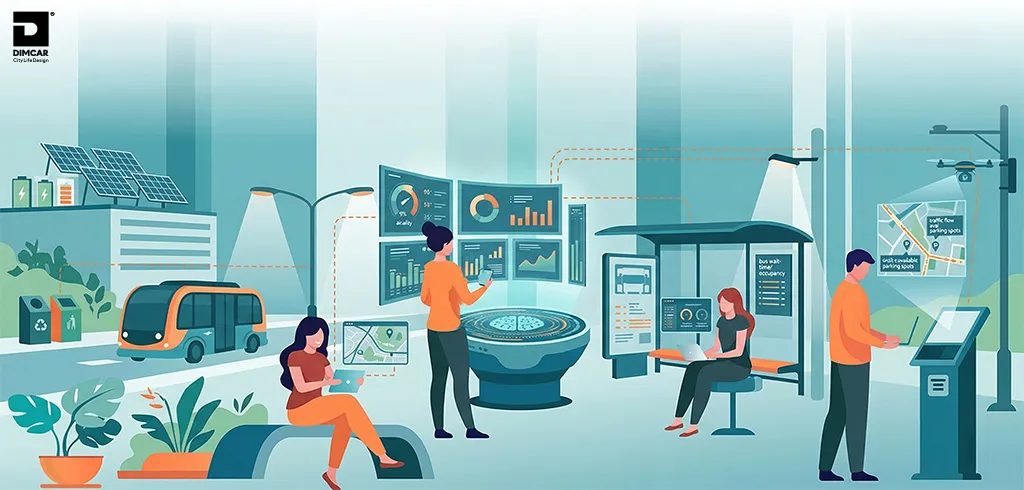
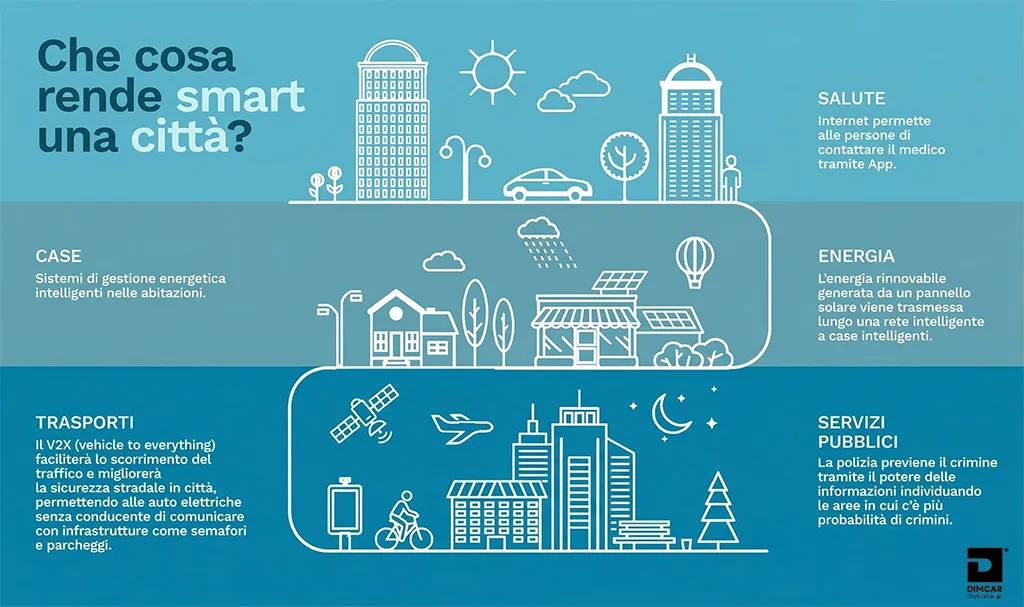
Beyond any technicalities, a smart city is an intelligent city where the use of technology is put at the service of people and the environment.
What does it mean in practice?
Organized public spaces, environmental management, smart transport, and infrastructure. More generally, technological and digital innovation at the service of citizens.
A utopia? Not at all. It is a concrete direction our cities are taking and will soon become the norm for all of us.
We realized it during the pandemic.
Lockdowns and remote working have made the deficiencies in the digital infrastructure of many Italian cities particularly evident to everyone.
Meetings on Google Meet and Zoom, video lessons, distance learning: unexpectedly everyone – to a greater or lesser extent – found themselves unprepared, lagging, and slowed down.
In that emergency moment, it became clear to everyone how fundamental technology has become in our lives, how many problems it can solve, and **how many opportunities it can give us**, if well-governed.
This is exactly what a smart city is: a city that starts with technology to **improve the quality of life for its citizens.**
In reality, "smart cities" were already being discussed at the end of the 1970s.
It was 1971. The mayor of a Brazilian city, Curitiba, decided to transform the concrete expanse of Rua das Flores into a boulevard full of flowers and benches where children could play freely.
His "revolution" was fueled by a visionary thought: **a city must be designed around its inhabitants.**
Roads, for example, must adapt to the needs of people, not the other way around.
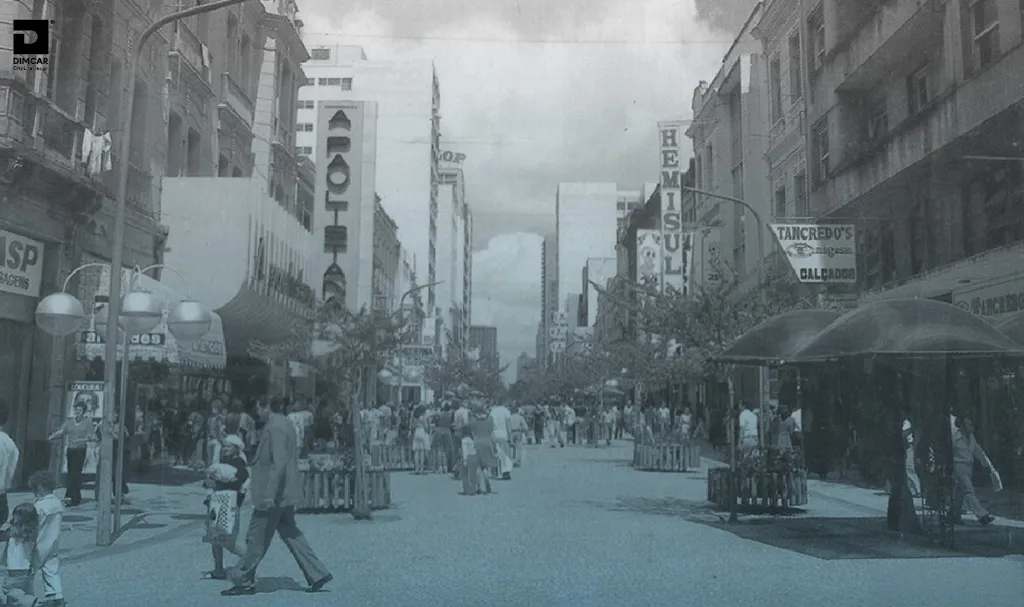
The result – it almost seems like a paradox but it's not at all – was an economic, industrial, and commercial boom for Curitiba, moving from being an agricultural center to a major technological hub.
What is a smart city actually like?
When the European Union talks about Smart Cities, it includes 6 dimensions:
People - people must be involved and engaged. The decision-making process is “bottom up”; the approach is “citizen-first”;
Government - the administration must focus on human capital, environmental resources, relationships, and community assets;
Economy - urban economy and trade must aim to increase productivity and employment through technological innovation;
Quality of life - the level of comfort and well-being that must be guaranteed to citizens (health, education, security, culture, etc.) is also of priority importance;
Urban mobility - smart mobility solutions, from e-mobility to sharing mobility, must reduce costs, environmental impact, and optimize energy savings;
Environment - sustainable development, low environmental impact, and energy efficiency are priority aspects of the city of the future.
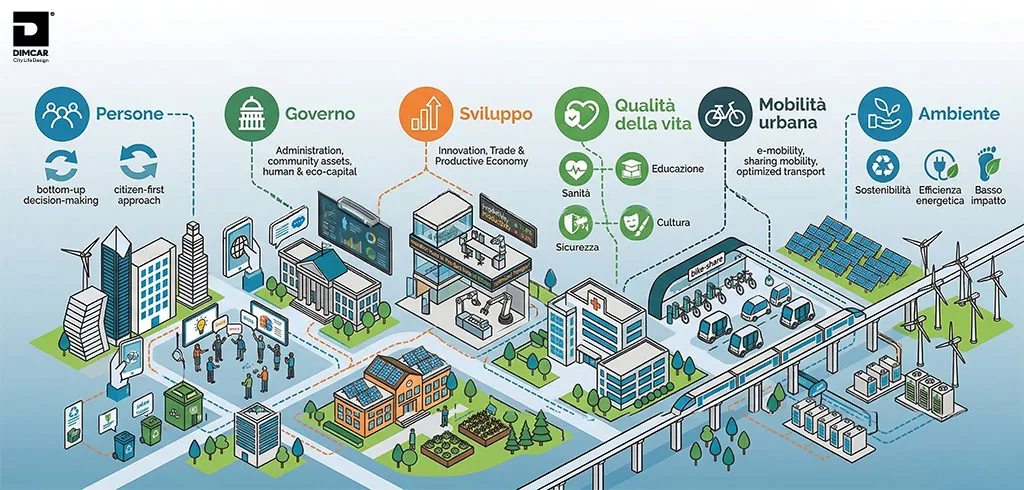
To be smart, therefore, a city must cover all aspects of people's lives by offering technological services and innovations without endangering the environment.
Some examples? Prague and Manchester, which use "smart" trash bins: when they are full, they automatically communicate with disposal centers. Another European example is Barcelona, crossed by hundreds of kilometers of fiber optics that help the City Council monitor traffic and noise and air pollution.
Smart cities in Italy: where and what are they?
And in Italy? Do smart cities already exist?
The answer is yes.
A virtuous example is Milan, which since 2016 has participated in the European Sharing Cities project and has invested 8.6 million euros in community funding to implement sustainable mobility, energy efficiency, and environmental quality interventions in an area of 24,000 square meters, where residents co-designed with experts to achieve a reduction in consumption between 50% and 70%.
iCity Rank 2021 – the ranking of smart cities in Italy
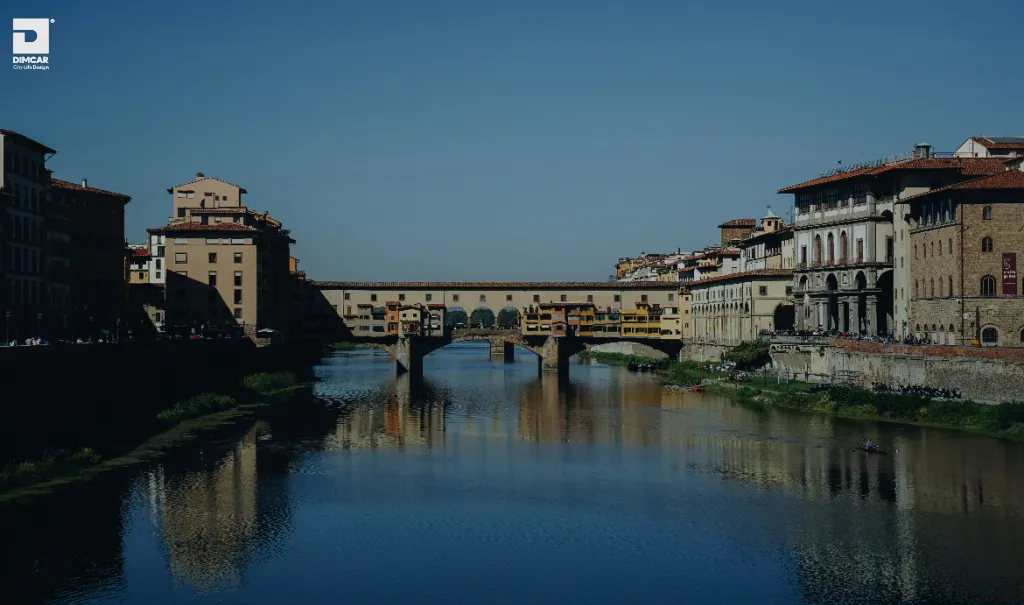
In 2021, for the second consecutive year, Florence is the "smartest" city in Italy, followed by Milan (second) and Bologna (third), with Rome Capital, Modena, Bergamo (tied for fourth), Turin, Trento, Cagliari, and Parma closing the top ten.
This is what emerges from ICity Rank 2021, the survey on the digitalization of Italian cities, presented at the Forum PA Città.
The research evaluates the positioning of provincial capitals in the digital transformation index, obtained from the average of 8 sectoral indices:
online availability of public services;
availability of public utility apps;
integration of digital platforms;
social media usage;
release of open data;
transparency;
implementation of public Wi-Fi networks;
diffusion of network technologies.
Immediately after the first ten cities, we find a series of municipalities in the rankings – Reggio Emilia, Palermo, Venice, Pisa, Genoa, Rimini, Brescia, Cremona, Prato, Bari, Bolzano, and Verona – that stand out for having achieved good results and positioning in all sectoral indices covered by the research.
Next is an intermediate bracket where the majority of Italian provincial capitals are located: here we find Pavia (23rd), Siena (24th), Piacenza (25th), Naples (26th), Lecce (27th), Vicenza (28th), Padua (29th), Ravenna (30th), and another 60 cities "evolving" in their digital transformation journey.
At the bottom, however, are about twenty capitals lagging in almost all indicators: the ranking closes with Caltanissetta (88th), Potenza (89th), Fermo and Teramo (90th), Chieti (93rd), Catanzaro (94th), Crotone and Benevento (95th), Cosenza and Rieti (97th), Trapani (99th), Caserta (100th), Nuoro (101st), Foggia (102nd), Agrigento (103rd), Avellino (104th), Carbonia (105th), Isernia (106th), and Enna at the bottom (107th).
Tags: smart cities